“The psyche (of humans) and the cosmos are to each other like the inner world and the outer world. Therefore, man participates by nature in all cosmic events, and is inwardly as well as outwardly interwoven with them.”
— The Secret of the Golden Flower, translated and explained by Richard Wilhelm
“But if you change, the countenance of the world alters.”
— The Red Book, by C. G. Jung
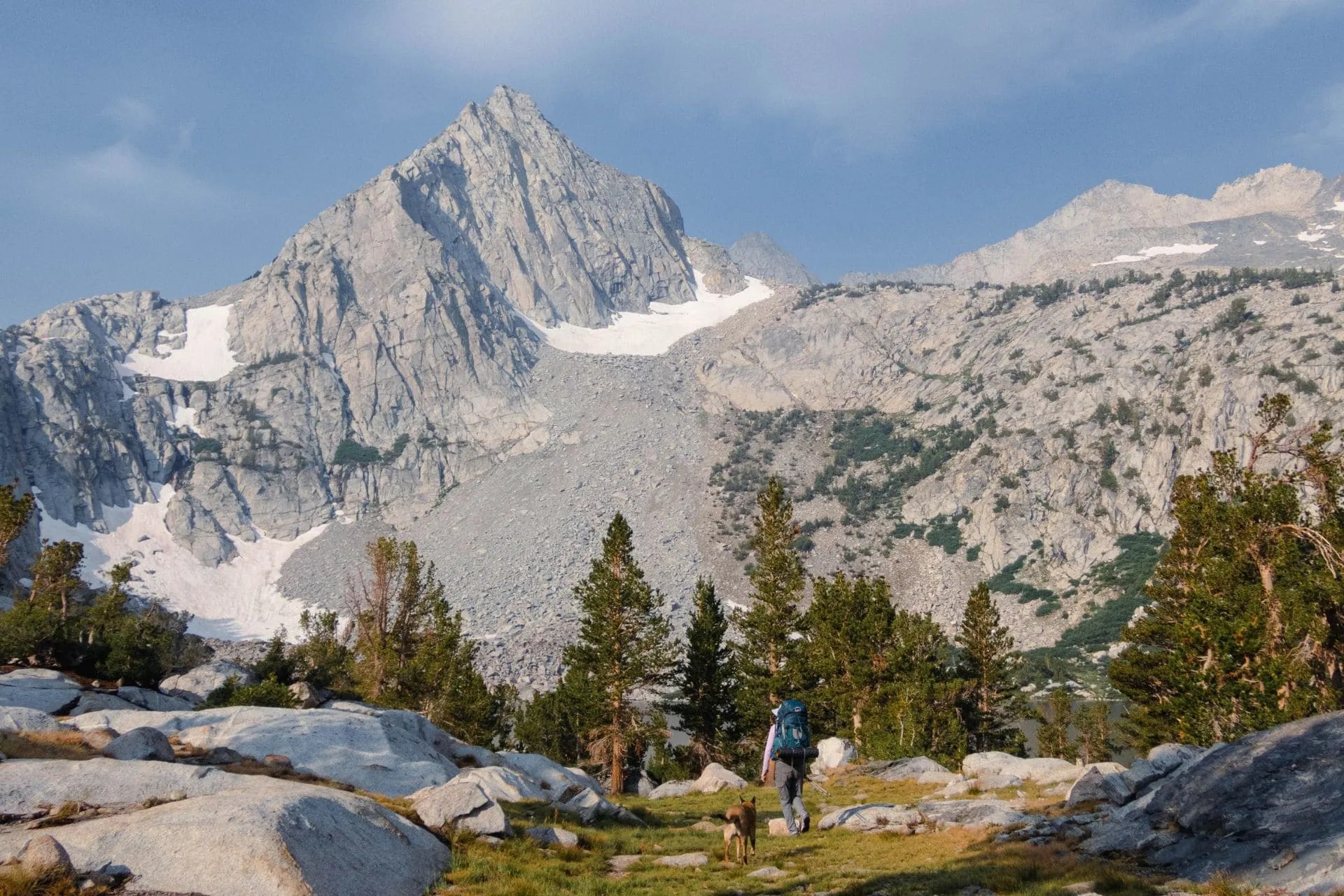
When hiking in the mountains, I often reach out to touch the different elements along the trail, sensing the energy each one offers.
Mountain cliffs evoke a feeling of centeredness—stable, secure, solemn. Beneath their hard, smooth surfaces, a warmth radiates from deep within: peace, well-being, quiet strength. From a distance, they may appear intimidating. Yet once I touch them and sense their energy, the warmth is unmistakable, and their entire countenance shifts through that simple, yet deep, connection.
Trees speak through the depth of their roots and the texture of their trunks, their branches spreading outward. They gently correct my posture, aligning my body so I stand firmly on the ground—rooted to the earth, standing tall, absorbing nourishment from the soil, the sunlight, and the breezy air.
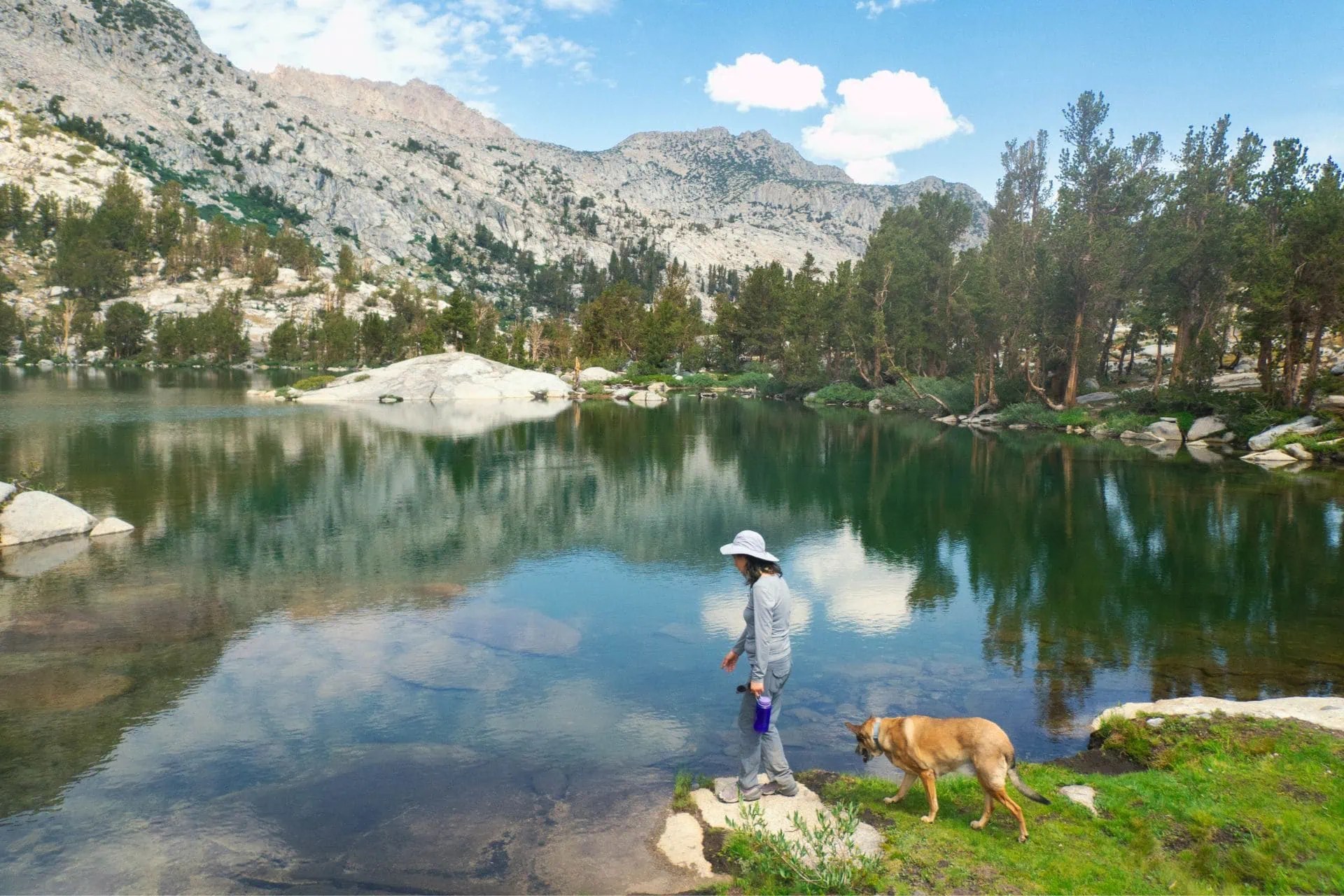
Water, whether peaceful or rushing onward without a care, carries a message of reassurance: all is well. The flowing water whispers, let go—don’t worry, we may not know where we are going, but it is okay. Let it go.
The earth—the trail, the dirt beneath my feet—is always there, quietly supporting me as I walk. It is the most basic foundation of all life, sustaining everything. It is Mother Earth.
The wind, the fragrance, the air—I can feel them, smell them, sense their presence. These subtle forms of existence are often overlooked when my mind is too busy to notice.
As I meditate more deeply into my inner self, my own abyss, I begin to realize that these elements I once perceived as external are also parts of me. They are different aspects of my own nature, reflections of who I am.
As I grow older, I notice a gradual shift taking place within me. I am slowly moving away from seeking external validation or attempting to make an impression in the outer world. Instead, I feel more at ease in my own skin, offering myself the acceptance I once sought elsewhere. As a result, I can love the people in my life more deeply, without needing to express it outwardly. I have more energy now to tend to my own inner garden.
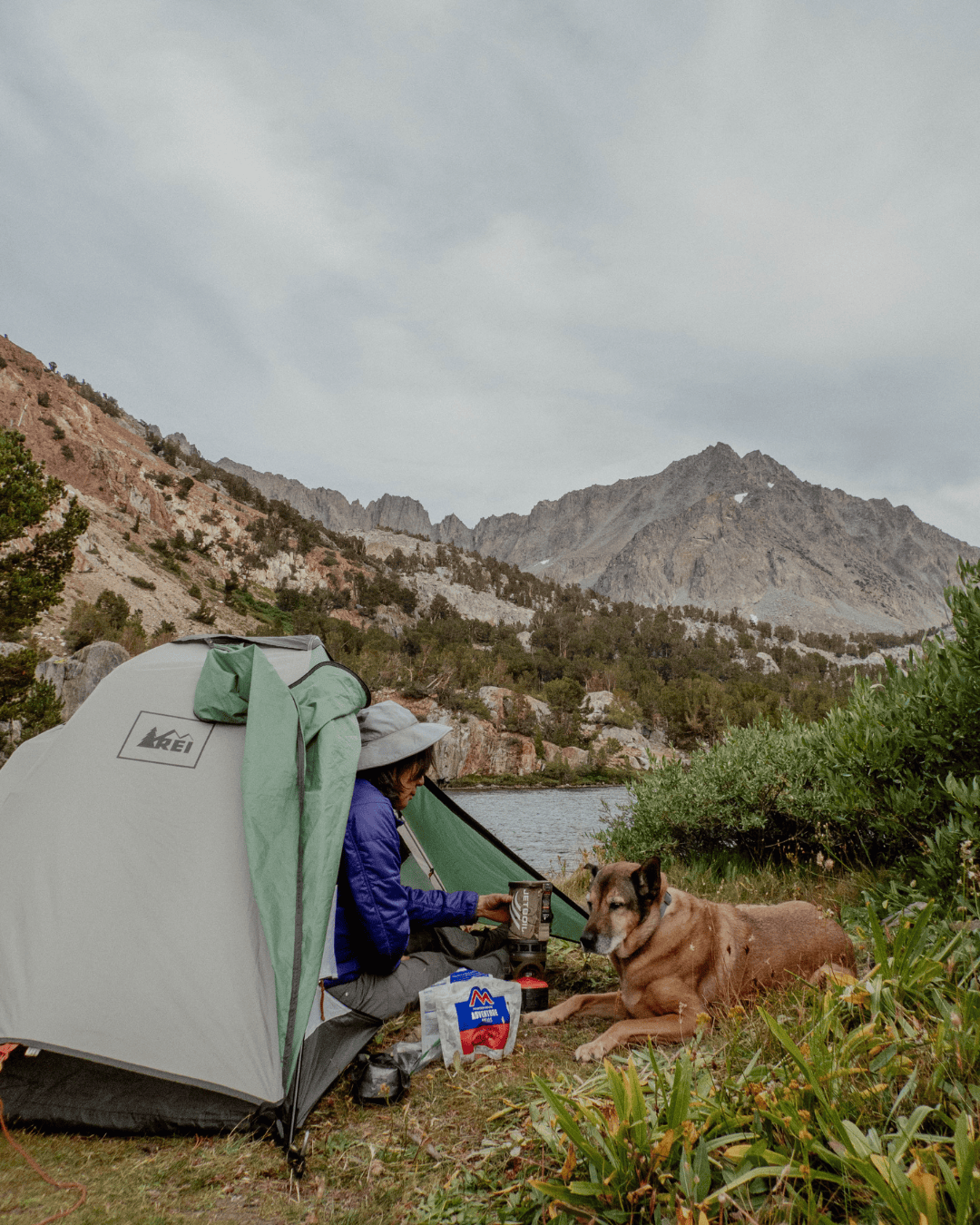
We often say, “Be kind to yourself.” But what does that truly mean? Each person discovers their own way. I thought I had too—until Boscoe taught me something more, even after he had departed.
On the drive back from an overnight camping trip in Joshua Tree after his passing, I was navigating the outskirts of Riverside as freeways merged. A question surfaced: Why do I miss Boscoe so much? Distracted by the thought, I missed a freeway split. Immediately, I became upset with myself—How could I miss that? Now I’m stuck on a different freeway; who knows what traffic awaits. Then I caught myself. How critical I was being. How familiar that inner dialogue felt. And suddenly, I understood why I missed Boscoe so deeply: he never judged me. How comforting it is to have a companion who never criticizes or talks back. I smiled, imagining him beside me—looking up at the freeway signs, then at me, then settling back to sleep. In that moment, I recognized a long-held form of unkindness to myself.
When I am unkind to myself, I do not suffer alone. That unkindness inevitably reaches everyone in my sphere, often without my awareness. The way I treat myself flows directly into my relationships with others. If I cannot accept myself as I am and give myself a good amount of space, how can I truly accept others without judgment and give each one the amount of latitude we all need? Jesus said to treat others as we treat ourselves. I once understood this as a call to extend kindness outward. Now I see that the reverse is also so true and important: if I treat others with kindness, I must extend that same kindness to myself too. Otherwise, how genuine can my compassion truly be?
As self-acceptance deepens—after sixty years of living on this beautiful earth—I notice a spaciousness emerging between myself and my loved ones. It is a healthy space, a good space—one that honors the truth that each of us walks our own path. Just as I trust the universe with my own journey, I trust it with theirs. This space allows me to see relationships more clearly and objectively, less entangled in anxiety, regrets, fear, or resentment, and more grounded in love, simplicity, and respect for both individuality and connection.
Back to the elements of nature – I see those attributes within myself too.
The mountain is within me too. In the Chinese trigram, Mountain is composed of two Yin lines at the bottom and one Yang line on top. It represents stillness and meditation—external steadiness with softness, warmth, receptivity hidden beneath. My love and emotions, too, are sometimes buried under layers of protection or respectful distance. Yet when a connection is made, it radiates outward from my heart. There is nothing superficial about it. Little by little, I have walked away from superficiality.
At the time Boscoe was passing on from this world, I remember I was that mountain for him – steady, secure and safe. It is ok, all is good my dear…. The sadness of his departure was buried deep.
Water teaches me softness and strength. In the Chinese trigrams, water holds two Yin lines on the top and bottom, with a Yang line at its core. On the surface, it is gentle and yielding; at its center, it is strong. Letting go—allowing things to pass without attachment or expectation—comes more naturally when the core is strong and the Self remains steady within. This is why water is regarded as the highest virtue in Taoism: it nurtures all beings and settles in the lowest places, not because it tries to be virtuous, but because it simply is. No pretense. No striving. Just its true nature.
This process continues within me—letting go, respecting others, releasing attachment. What remains is a strong core and a quiet sense of interdependence with all beings in my small world. I am learning to be more present for my family, my human friends, my animal companions—out of a natural extension of my own nature. When it flows naturally, it is clear of entanglement of our mind and thoughts. It is simply being.
The grounding nature of trees—their roots reaching deep into the earth—reflects another part of my being. The depths of my soul may be dark and vast, like an abyss, yet within that space lie hidden nutrients waiting to be transformed into light and energy. A tree cannot grow tall and firm without deep roots; neither can we without reaching into the depths of our own being. In Buddhism, it is said that when one looks deeply into the soul, one can see the lineage of ancestors. Nothing is wasted. Energy only transforms.
The earth, the dirt, may seem insignificant—common, unnoticed—yet it is the most fundamental element of our planet. When hiking, I often gaze upward at forests, birds, mountain peaks, and clouds, admiring their beauty while forgetting the ground beneath my feet that supports my existence. At times, I take myself too seriously, caught up in lofty goals and spiritual pursuits, seeking unique experiences and accomplishments, while forgetting the sacredness of the ordinary. I am that speck of dirt too—one human among billions, part of countless living beings past, present, and future. I do not always need to be the mountain, the tree, or the ocean. Sometimes, being the dirt—humble, simple, unadorned, closest to the earth—is enough. There is warmth and comfort in that realization, like settling down at home.
Perhaps this is why Buddhism teaches that there is no fixed “I.” I am a combination of all the elements around me—a temporary form expressing their shared energy. Seen this way, I am connected to all beings, without boundaries. All exists. All belongs.
Peace arises from this understanding.
With it, the gate to my inner world opens wider. For now, the outer gate remains half-shut, allowing me the time and energy to explore this new inner landscape.
In meditation, I have come to recognize two energies within myself more clearly. One is my inner child, carrying personal and generational trauma—past emotions and memories etched deeply within. At times, these traumas form blocks, like dark clouds obscuring the sunlight behind them. The other is the gatekeeper—the judge—strong, critical, and self-righteous. This judge arose to protect the child from the outer world through constant evaluation and judgment, and to ensure survival and thriving through inner discipline and demand.
Now, I sit with this judge in meditation, thanking her for her service over the years and gently showing her that the child—my core—has grown strong and connected, both inwardly and with the universal energy, the Tao. All is well. Slowly and very reluctantly, the judge steps aside, one moment at a time. Life becomes easier, more spacious, allowing more time to notice small, simple things and appreciate their beauty. The burden of striving—to accomplish, to produce, to prove—softens and gradually fades. I grow more comfortable within my own core existence.
What remains is a quieter question: What do I truly want? What is my nature calling me to do? What brings a smile to my soul? Perhaps this is the deepest form of kindness to oneself, and the truest respect for one’s own life—living authentically. And maybe, when I live in alignment with my true nature, life unfolds effortlessly… like water.
The effects of that are not for me to measure or determine. I am simply following my nature—following the Tao.