Recently, we spent nearly a month in Ecuador, traveling through three distinct regions: the
Amazon rainforest in the Yasuní region, the Galápagos Islands, and the Mindo Cloud Forest. In
each place, I found myself learning something simply by observing nature.
In the Amazon, we chose a seven-day tour deep in the rainforest, including two nights camping
in the jungle. I wanted to have enough time to truly absorb the environment—its elements, its
energy—and, in some way, integrate that into myself. Somewhere deep within, I felt this was
something I wanted and needed to do.
I think I received as much as I was ready to take.
In that region, life unfolds across two main landscapes: the jungle and the river.
Each day, our small boat moved slowly along the river, searching for mammals, birds, reptiles,
and fish. Our guide had an incredible eye.
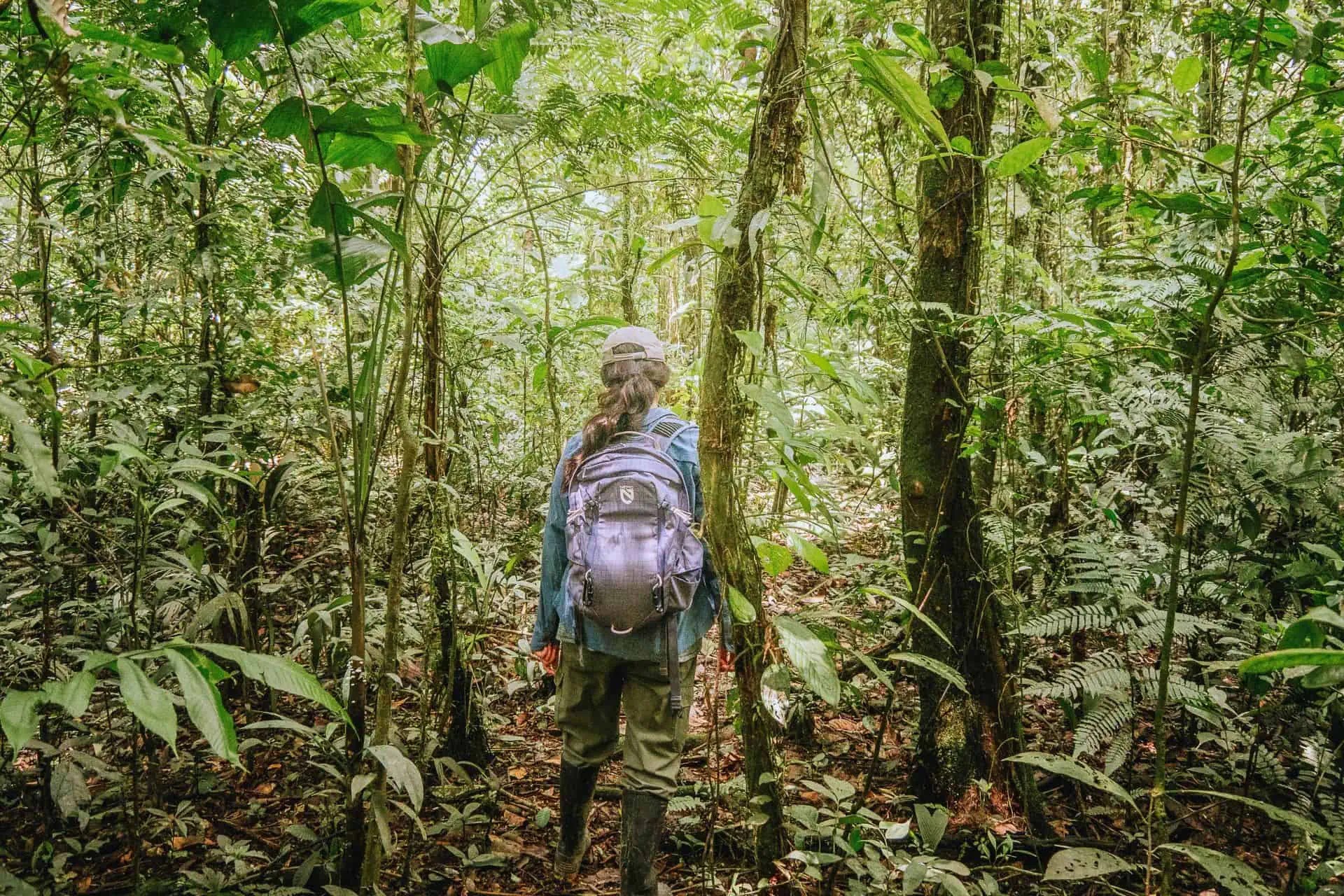
On some days, we walked through the jungle, scanning for movement—on the ground, in the
branches, anywhere life revealed itself. We wore knee-high rain boots, a quiet acknowledgment
that we were stepping into a world not entirely predictable.
At first, each jungle walk filled me with excitement. My eyes searched constantly for
movement, and I marveled at the plants—how they grew independently, symbiotically, even
parasitically. Towering trees stretched above layers of dense undergrowth. Vines, perhaps
hundreds of years old, twisted and rooted themselves through everything, coated in moss,
lichen, and moisture. The forest floor was always wet, covered in layers of decaying leaves,
broken branches, and fallen trees. Yet from this decay, new life emerged—some reaching
upward for sunlight, others thriving quietly along the forest floor.
That same ground also supported countless animal lives: insects, spiders, butterflies, worms,
lizards, ants both huge and small, along with tarantulas —most of them nearly invisible without
a trained eye. I often thought about how little I was actually seeing. While we observed a tiny
fraction of this ecosystem, countless unseen creatures were likely aware of us, wondering what
these three humans were doing in their world!
But after the initial wonder, something deeper began to surface.
Beneath the visible and amazing abundance was an overwhelming force of life. Slowly, it began
to feel almost too much to take in. With every step, I saw the endless cycle of life
unfolding—unceasing, indifferent, complete.
Dead leaves and fallen trees layered the forest floor, breaking down in heat and moisture over
time. From this decomposition came rich soil that nourished new growth, which in turn
sustained other lives. Life fed life in a continuous, harmonious cycle, without intervention.
Nothing was wasted. It simply flowed.
The animals lived in constant awareness—seeking food or avoiding becoming food. Many were
camouflaged. Even plants had defenses: thorns, toxins, protective structures. This was nature in
its purest form—without pretense, without judgment, each going through its own life, its own
existence, responsibly.
“That which exists through itself is called the Way (Tao).”
In the jungle, I felt I was witnessing exactly that—an ecosystem existing through itself, complete
and self-sustaining. There was no good or bad, no judgment—only life unfolding in the present
moment.
Maybe that is a natural phenomenon reflecting the principle of the Tao.
The earth that supports all life also holds death, along with the time it takes for the ongoing
decomposition process – transforming dead matter into nutrients. If I look at something in the
short term, events could be interpreted as bad, such as a plant that died. But in the long run,
through time, it fertilizes the ground for other living things.
Individuals and collective life existed simultaneously – independent life, yet deeply
interconnected. A web that goes in countless directions and dimensions, including the
dimension of time.
And it was messy.
The jungle floor, layered and uneven, chaotic and dense, was also incredibly fertile. Life thrived
precisely because of that messiness. Our guide often had to clear the path as we walked, only
for the plants to reclaim it quickly. It felt as though the jungle was saying: life grows from
this—this complexity, this disorder, this mess, shadow and darkness.
After a while, I began to feel overwhelmed. The intensity, the density, the constant presence of
life and reminder of death—I realized how different it was from the structured, organized, mad-
made world I was used to.
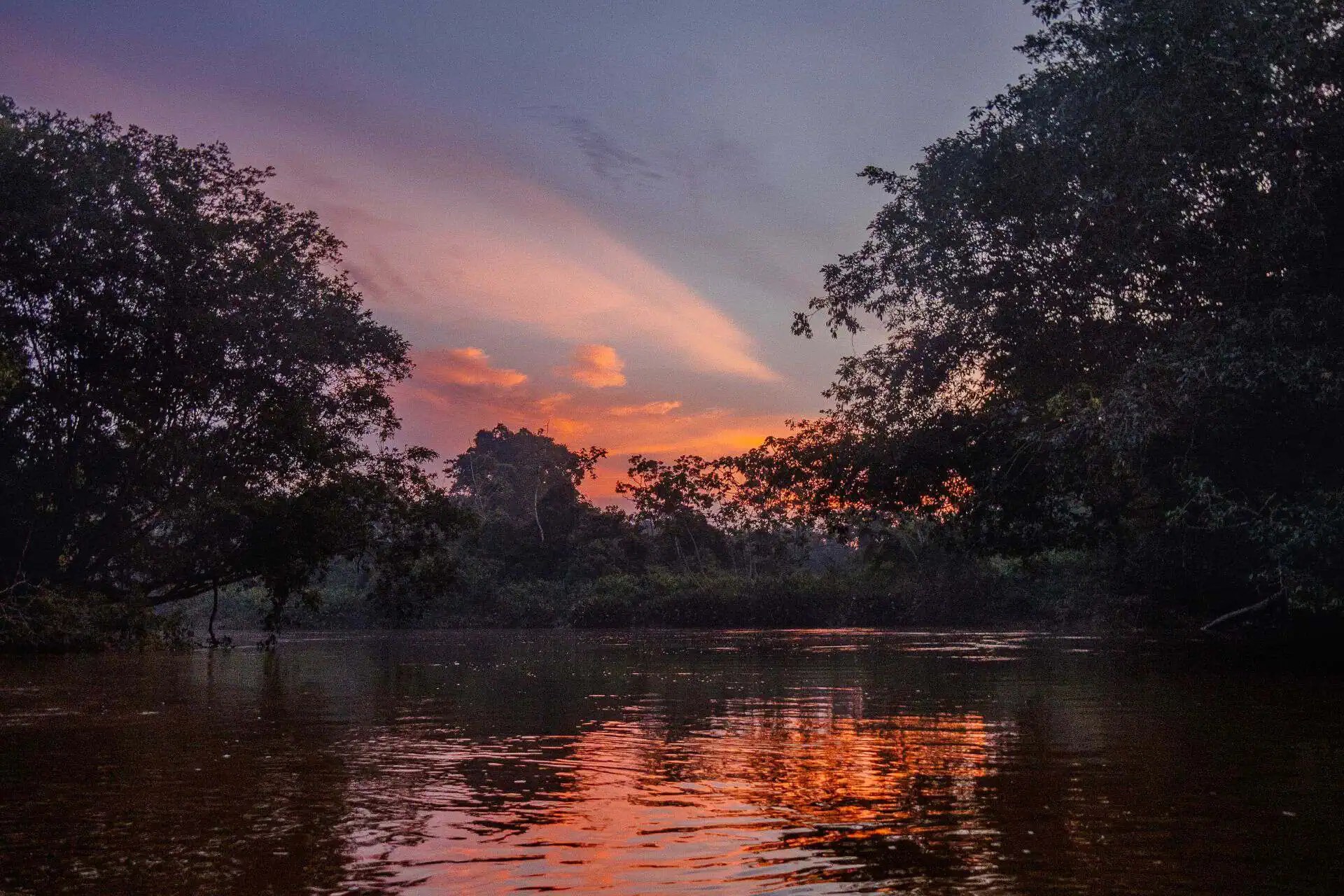
And then there was the river.
Out on the water, everything felt different. A gentle breeze moved with us as we floated along.
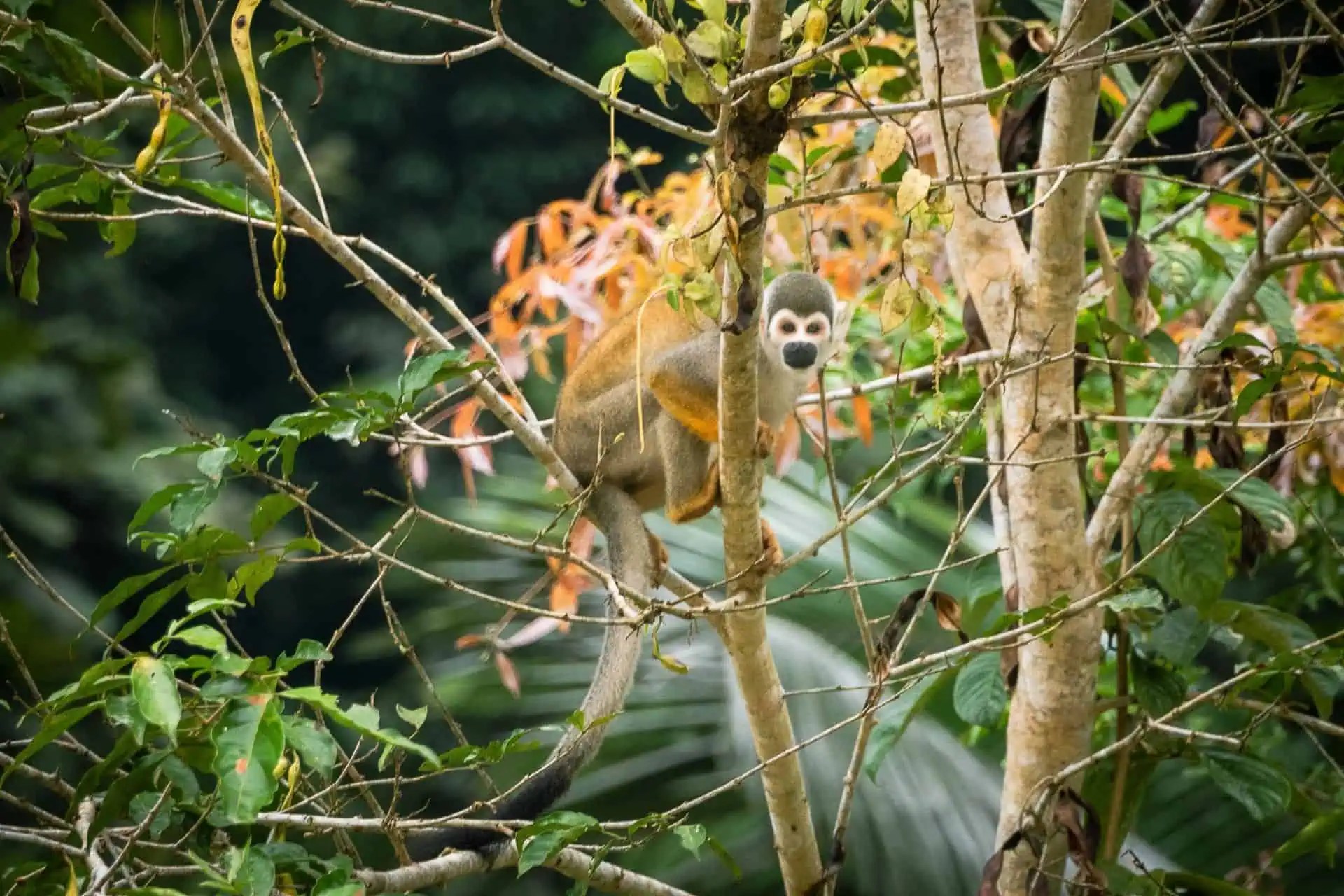
From a distance, I could watch animals, birds, butterflies, turtles—even pink dolphins—moving
freely. The forest was alive with sound: birds calling, monkeys echoing through the trees, leaves
rustling, insects humming. And the river itself flowed steadily onward, never lingering, always
moving toward the sea.
On the river, I felt ease. There was space to observe, to enjoy, and to let things pass. It felt
peaceful, fluid, free.
Yet the jungle stayed with me.
Its presence lingered in my mind, as if asking me to pay attention. Gradually, a realization began
to take shape: life is messy. Emotions are messy. Memories and relationships are messy. All of it
exists within me, just as it does on the jungle floor.
All the experiences that I had, consciously or not, is within me. My mind tries to judge them as
good or bad, and habitually reject the “bad”. But the jungle is telling me no, there is not good
or bad. It simply is. Something can be interpreted as bad when it happens, but with the
passing of time, they can come back as nutrients. Whatever it is, it plays a part in forming me
to be who I am.
“All is in there, please don’t reject. Instead, embrace it.” – the Jungle seems to be saying to me.
“That is who you are. You are the sum of all that… Don’t waste energy trying to figure out
what was good and what was bad. Life is messy. But that is how it is supposed to be.” Maybe
this is what Jung referred to as “the below”. What comes out of them is “the above”.
In my younger years, I learned not to trust my emotions. They felt messy, attention mongering,
inconvenient. I did not have the time or the energy to deal with them, so I set them aside and
focused on what was at hand – work and raising my children. I disciplined myself to sort out
everything into neat piles – thoughts properly organized, experiences reflected upon, events
happened were interpreted in ways that I wanted to see them. Subconsciously I had my own
parameters of what was allowed to come through. The rest were filtered out, at least from my
conscious mind.
Like the River, I moved through life – from a distance, I observed, picked and chose what I
wanted to see and engage with. Then I moved on, to the next day, to the next task, to create,
to do whatever I had in mind. it was efficient. It worked.
But now, with more time and space in my life, I find myself turning toward what I once avoided.
I am learning that rejection hardens the inner soil, making growth more difficult. What is left
unacknowledged does not disappear—it waits. Waits for acknowledgement and acceptance.
So I am learning to allow. To create space. To give attention. To give time. Like in the jungle,
sunshine, warmth, and time are needed for new life to emerge from the floor.
Even the landscapes I’ve been drawn to seem to reflect this inner shift. For years, I hiked in the
Eastern Sierra—high-altitude terrain with sparse vegetation, dramatic peaks, and alpine lakes. It
was clean, stark, breathtaking. When the mountains called, I answered, every summer.
But in recent years, I found myself gradually drawn to valleys—places with more water, more
plants, more diversity. And now, the jungle presents yet another landscape entirely: dense,
humid, overflowing with life.
Perhaps the outer landscapes I’m drawn to mirror my inner landscape.
For much of my life, I created a controlled, structured environment for myself—one that felt
manageable and predictable. But that kind of control requires energy. The jungle, in contrast,
suggests something different: let go.
Not everything needs to be understood through logic. The mind has limits. If I rely on it alone,
how much might I miss?
The jungle invites a different kind of experience—one of openness to complexity, creativity, and
the unknown.
When I first returned from the trip, I struggled with this. The image of the jungle stirred
fear—the unseen, the uncontrollable, the dark and tangled aspects of life. I wondered what
might happen if I truly let go.
But as I write this, I begin to see it differently.
The jungle is simply another landscape—one I can choose to explore, just as I would a valley, a
river, or an alpine mountain range. And like the earth itself, my inner world contains all of these
terrains.
What the jungle ultimately showed me is this: all experiences—especially the difficult
ones—become the compost of life. Over time, with our attention, reflection, they enrich the
soil from which growth emerges.
From that soil, creativity comes in countless ways – through art, music, writing, gardening,
cooking, storytelling, even how we sense things around us – often without our awareness.
Perhaps, in ways we don’t fully understand, time transforms everything.
That realization gave me a sense of peace and trust. All is well….